IQmonitor - Палата № 6

  • Палата № 6

    Палата № 6

    Палата № 6

    "Палата № 6" - гениальное произведение А.П.Чехова - определяет место и стиль непринуждённого общения на самые разнообразные темы (желательно связанные с IQmonitor и спутниковым приёмом). Рассказы о невероятных случаях из вашей практики и загадки (желательно с юмором) приветствуются. Оживлённое, иногда бурное, но никогда не доходящее до драки общение происходит на удобных для каждого из обитателей Палаты № 6 языках. Понимание / непонимание - дело каждого заинтересованного в беседе обитателя Палаты.

    Старожил Палаты - странник, его давнишний собеседник и оппонент - Эни (который убеждён, что именно он - Энштейн) :101: - постоянные жители.

    Посетители находятся по другую сторону дверей с изящной решеткой вместе с санитарами и охранниками. Ихние реплики и вопросы могут быть проигнорированы пациентами. Но пациенты слышат все вопросы и реагируют на правильные решения. Если посетитель желает присоединиться к обсуждению на полных правах, то у него есть единственный выход - попасть в палату, загадав загадку из сферы спутникового приёма или практики использования IQmonitor :40:. Если Эни сочтёт вопрос достаточно безумным или просто интересным :41:, то странник объявляет о новом пациенте. Тот из посетителей, который первым даст правильный ответ также может стать (при его желании и утверждении странником :125:) почётным пациентом.

  • Как-то утром странник спросил:

    - Эни, а что это ты всю ночь шкрябал на стенке?

    - Это равнобедренный прямоугольный треугольник ABC, который лежит на гипотенузе AC. Длина катета 1 метр...

    - Знаю! Длина гипотенузы AC = sqrt(2) или примерно 1.424м :26.

    - Не спеши, я ещё не задал вопрос :81: . Из середины каждого катета восстановим перпендикуляры и продолжим их до пересечения с гипотенузой. Получим два подобных первому треугольника. Для каждого из них продолжим процедуру деления пополам и так далее...

    - Ну хорошо, получили пилообразную с прямоугольными зубьями линию, которая приближается по мере деления к гипотенузе AC и ?..

    - И когда зубья линии стали настолько малыми, что я уже не различал разницы с гипотенузой, встал вопрос:

    Чему равна длина зубчатой линии при количестве операций деления треугольников стремящимся к бесконечности ?

    - Мда... А при чём здесь спутниковый приём ?

    - Вначале ответь на мой вопрос, а потом уже попробуем вместе разобраться с твоим :28:

  • 2m :26.

    qwer setup

    Location: Rastatt, Germany

    C-band: 47.5°West-68.5°East ORBITRON O-16 (4,9m)

    X-band: 42.5°W-63.0°E ORBITRON O-16 (4,9m off focus)

    Ku-band: 58.0°West-80.0°East KATHREIN CAS 23 (2,2m)

    Ka-band A/B/C/D: 24.5°W-75.0°E KATHREIN CAS 018 (1,8m)

    Ka-band band A KATHREIN CAS 120 fix on 42.0°E standby

    Ku-band LNB: Invacom SNF-031, Inverto Single Flange

    C-band LNBs: Kaonsat, C-Panorama 13K, Norsat 8000RI C-DRO, BrasilSat LNBF AP30 PLL, SOLID WIDE BAND EXTENDED C_BAND LNBF

    Ka-Band LNBs: Inverto Twin WHITE Ka Circular Dual Polarity LNB (flange), Inverto IDLK-SINL20-KAKU-OPP,MCL-KP04, Norsat 9000HX-O3B-BN, Orbital LNB1825F-1000D-WF55

    X-band LNB: Norsat X1000HAF

    Feeds: Invacom ADF_10 + 2 rings, XMW Ka-band Feed FD9000K

    Waveguide Polariser: AV-COMM

    Tuner: TBS 6925, TBS 6903, TBS 6903X, TBS 6522

    >qwer setup

  • 2m :26.

    - Эни ! Нам забили с первого же удара прямо в девятку ! :48: У нас может появится достойный сосед. Ждём письменного согласия уважаемого qwer  :74:

    - Eni ! Uns wurde gleich mit dem ersten Schuss ein Treffer direkt ins Kreuzeck eingeschenkt! :48: Wir könnten einen würdigen Nachbarn bekommen. Wir warten auf die schriftliche Zustimmung des geschätzten  qwer :74:

  • Danke euch beiden ... und vielleicht hatte das Rätsel mit bestimmten "Treppen" beim Satellitenempfang zu tun... :26.

    Achtung: Bildanhang wurde hier aus dem Forum-"Artikel"-Archiv geklaut... :69:...aber wo genau dort, weiß ich nicht mehr genau... :26.

    qwer setup

    Location: Rastatt, Germany

    C-band: 47.5°West-68.5°East ORBITRON O-16 (4,9m)

    X-band: 42.5°W-63.0°E ORBITRON O-16 (4,9m off focus)

    Ku-band: 58.0°West-80.0°East KATHREIN CAS 23 (2,2m)

    Ka-band A/B/C/D: 24.5°W-75.0°E KATHREIN CAS 018 (1,8m)

    Ka-band band A KATHREIN CAS 120 fix on 42.0°E standby

    Ku-band LNB: Invacom SNF-031, Inverto Single Flange

    C-band LNBs: Kaonsat, C-Panorama 13K, Norsat 8000RI C-DRO, BrasilSat LNBF AP30 PLL, SOLID WIDE BAND EXTENDED C_BAND LNBF

    Ka-Band LNBs: Inverto Twin WHITE Ka Circular Dual Polarity LNB (flange), Inverto IDLK-SINL20-KAKU-OPP,MCL-KP04, Norsat 9000HX-O3B-BN, Orbital LNB1825F-1000D-WF55

    X-band LNB: Norsat X1000HAF

    Feeds: Invacom ADF_10 + 2 rings, XMW Ka-band Feed FD9000K

    Waveguide Polariser: AV-COMM

    Tuner: TBS 6925, TBS 6903, TBS 6903X, TBS 6522

    >qwer setup

  • Когда Эни задал свой вопрос :

    Чему равна длина зубчатой линии при количестве операций деления треугольников стремящимся к бесконечности ?

    Я задал встречный : А при чём здесь спутниковый приём ?

    Не надеясь получить ответ, я попросил ИИ найти картинки, которые бы максимально соответствовали набору слов в обоих вопросах...

    И вот что выдал ИИ :

    When Eni asked his question:

    "What is the length of the jagged line as the number of triangle-division operations approaches infinity?"

    I asked a counter-question: "What does satellite reception have to do with this?"

    Not expecting an answer, I asked the AI to find images that best matched the keywords from both questions...

    And here is what the AI produced:

    Поверните рисунки на 40 - 45° по часовой стрелке и переверните по горизонтали -- Вы увидите практически те рисунки, которые мой сосед Эни царапал на стене Палаты №6 ...

    Повторяю свой вопрос А при чём здесь спутниковый приём ? Как называются эти графики и почему хихикал уважаемый  qwer ?

    Rotate the images 40–45° clockwise and flip them horizontally—you will see virtually the same drawings that my neighbor Eni used to scratch onto the wall of Ward No. 6...

    I repeat my question: What does satellite reception have to do with this? What are these graphs called, and why was the esteemed  qwer  chuckling?

  • Bildanhang wurde hier aus dem Forum-"Artikel"-Archiv geklaut... :69: ...aber wo genau dort, weiß ich nicht mehr genau... :26.


    Drawing illustrating the phase center position of the Inverto Black Ultra LNB feed (by strannik) :96:

    Kann ich diese Ihre Frage als Zustimmung werten, sich Eni und mir anzuschließen? :74:

  • Ja, ich schließe mich gerne euch beiden an, danke... :74:

    qwer setup

    Location: Rastatt, Germany

    C-band: 47.5°West-68.5°East ORBITRON O-16 (4,9m)

    X-band: 42.5°W-63.0°E ORBITRON O-16 (4,9m off focus)

    Ku-band: 58.0°West-80.0°East KATHREIN CAS 23 (2,2m)

    Ka-band A/B/C/D: 24.5°W-75.0°E KATHREIN CAS 018 (1,8m)

    Ka-band band A KATHREIN CAS 120 fix on 42.0°E standby

    Ku-band LNB: Invacom SNF-031, Inverto Single Flange

    C-band LNBs: Kaonsat, C-Panorama 13K, Norsat 8000RI C-DRO, BrasilSat LNBF AP30 PLL, SOLID WIDE BAND EXTENDED C_BAND LNBF

    Ka-Band LNBs: Inverto Twin WHITE Ka Circular Dual Polarity LNB (flange), Inverto IDLK-SINL20-KAKU-OPP,MCL-KP04, Norsat 9000HX-O3B-BN, Orbital LNB1825F-1000D-WF55

    X-band LNB: Norsat X1000HAF

    Feeds: Invacom ADF_10 + 2 rings, XMW Ka-band Feed FD9000K

    Waveguide Polariser: AV-COMM

    Tuner: TBS 6925, TBS 6903, TBS 6903X, TBS 6522

    >qwer setup

  • - странник, вставай !

    - Что случилось, Эни ?

    - Нам под дверь подсунули анонимку !

    - Какую анонимку ? Покажи ...

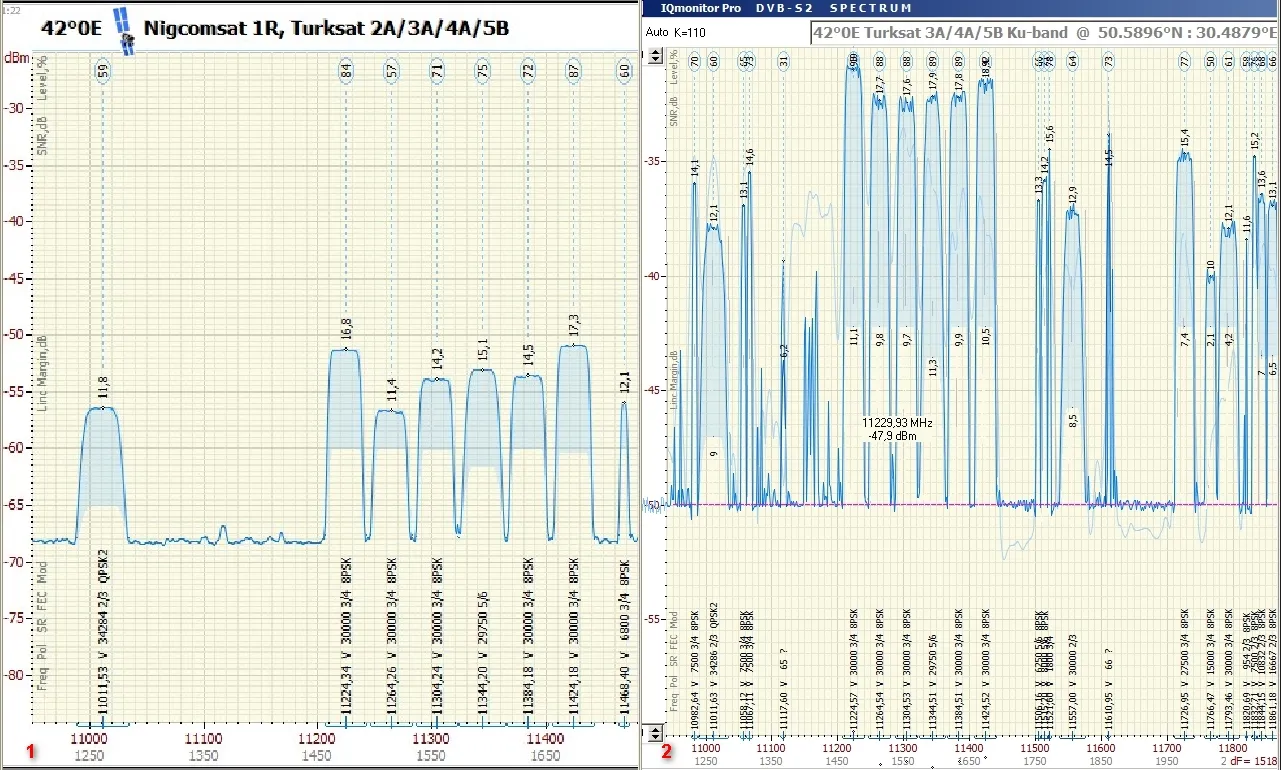
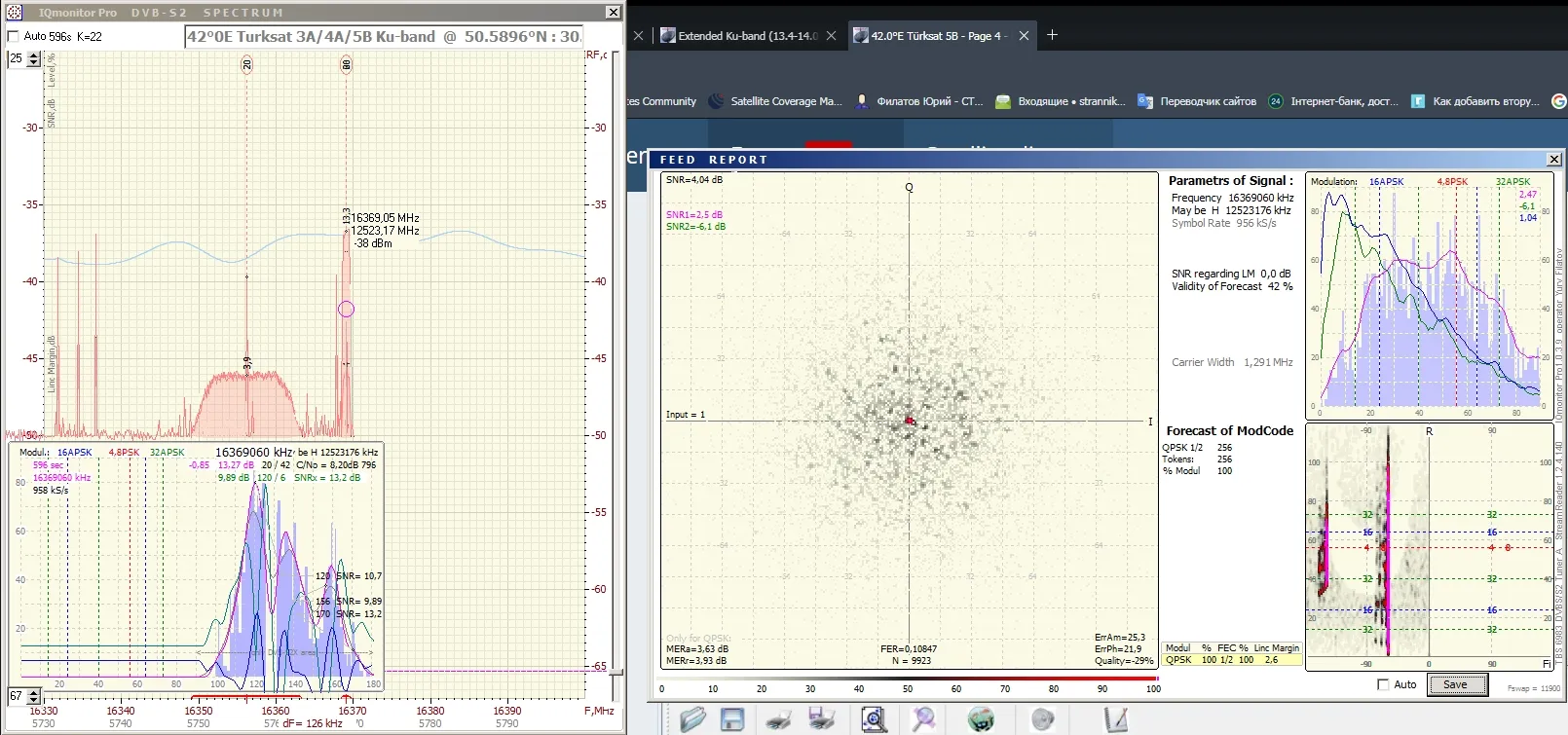
    - Это не анонимка -- это спектры высокого разрешения ( HR ), которые получены моей программой IQmonitor Pro со спутника 42°E, но разными антеннами. Одна поменьше и похуже, а вторая побольше раза в полтора - два...

    Первый спектр после регистрации был сглажен при перерисовке (отмечен чекбокс Sm3 ) и сохранён кнопкой Save. Если бы не были обрезаны края спектра, мы бы знали и время, и место приёма, и диаметр антенны...

    Второй спектр сохранён кнопками Ctrl + Print Screen -- об этом свидетельствует бледно-голубая линия RF спектра, которая при перерисовке кнопкой Paint при отключённом чекбоксе Add исчезает. Из этого следует, что уровень шума выставлен на 18дБ выше, чем у первой антенны. Не мешало бы его установить на уровень -53дБ, тогда бы мы видели SNR = 19дБ у транспондера 11224.6 МГц ...

    - А какая из антенн ( первая или вторая) больше ?

    - Спроси у кого-нибудь из посетителей, :80: если они будут. У санитаров спрашивать не советую - вмиг оденут тёплую ночную рубашку с длинными рукавами :26.

    - strannik, get up!

    - What happened, Eni ? :54:

    - Someone slipped an anonymous note under our door!

    - What kind of anonymous note? Show me...

    It’s not an anonymous note—it’s high-resolution (HR) spectra obtained by my IQmonitor Pro program from the 42°E satellite, but using different antennas. One is smaller and of lower quality, while the other is about one-and-a-half to two times larger...

    The first spectrum was smoothed during redrawing (the "Sm3" checkbox was checked) and saved using the "Save" button. If the edges of the spectrum hadn't been cropped, we would know the time, the reception location, and the antenna diameter...

    The second spectrum was saved using the Ctrl + Print Screen keys—this is indicated by the pale blue RF spectrum line, which disappears when redrawing via the "Paint" button with the "Add" checkbox unchecked. This implies that the noise level is set 18 dB higher than for the first antenna. It would be a good idea to set it to -53 dB; then we’d see an SNR of 19 dB for transponder 11224.6 MHz...

    - And which antenna—the first or the second—is the larger one?

    - Ask one of the visitors, if any show up :80: I wouldn't advise asking the orderlies—they’d put you in a warm, long-sleeved nightgown in a heartbeat :26.

  • Повторяю свой вопрос А при чём здесь спутниковый приём ? Как называются эти графики и почему хихикал уважаемый qwer ?

    I repeat my question: What does satellite reception have to do with this? What are these graphs called, and why was the esteemed  qwer  chuckling?

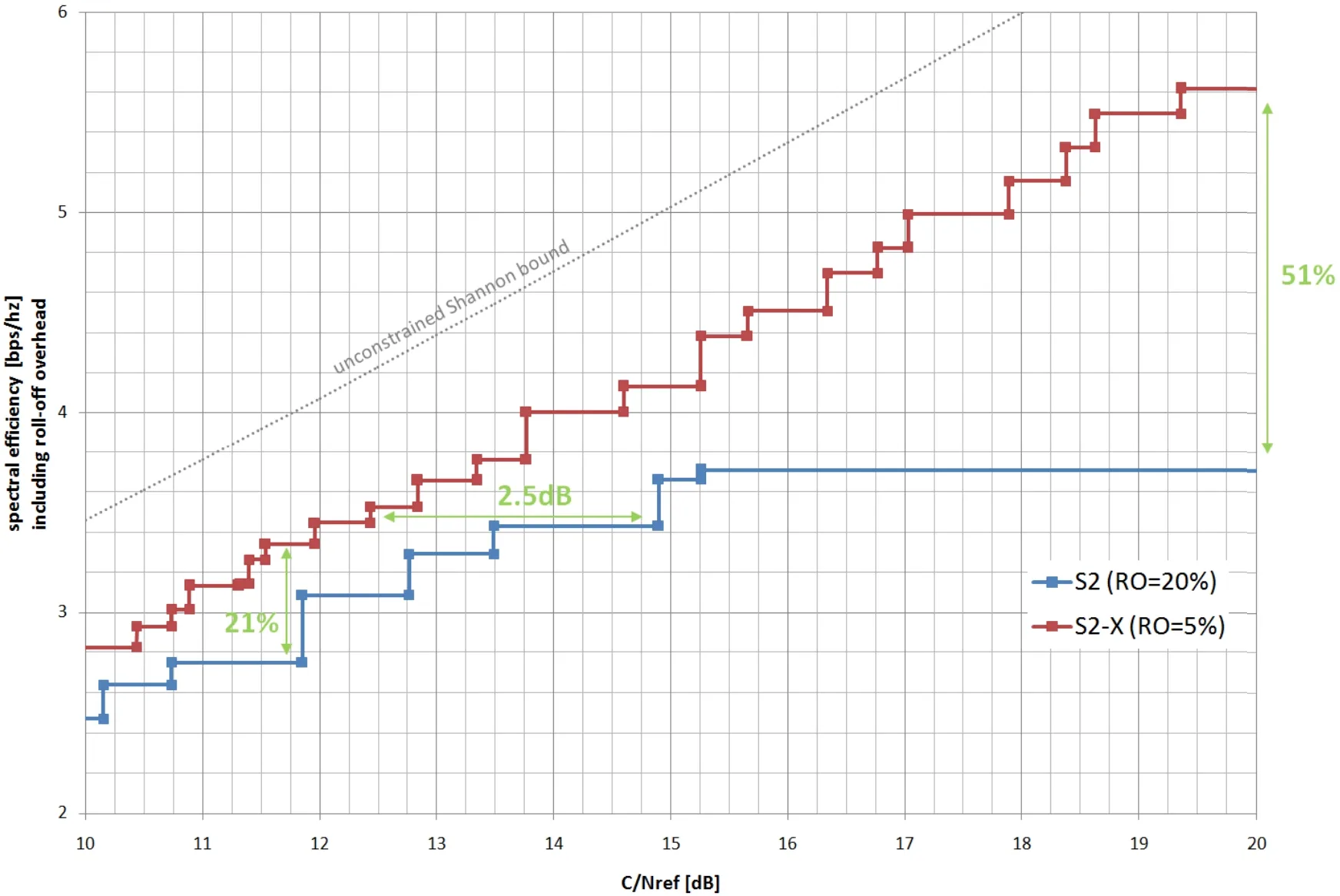
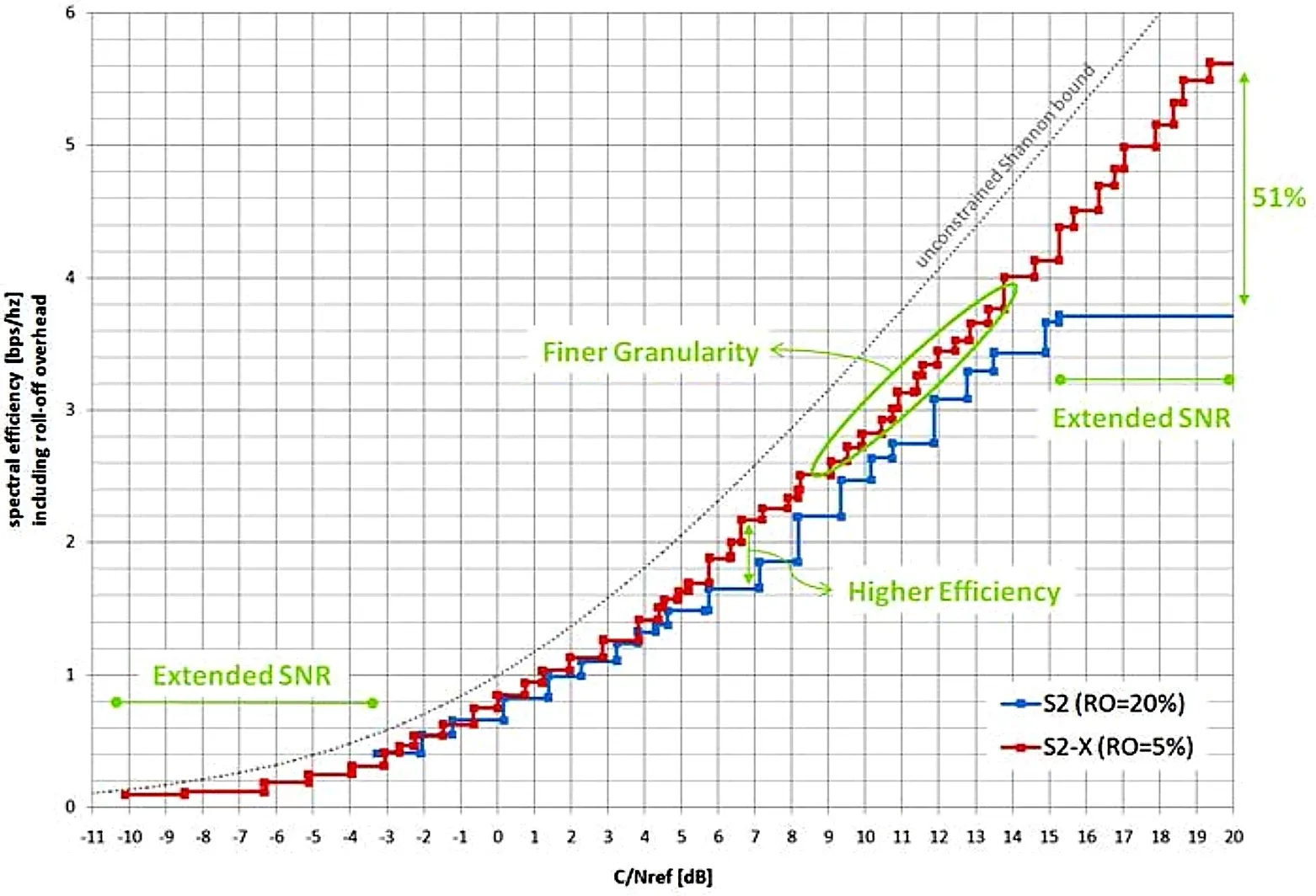
    - Ты знаешь, Эни, я думаю, что qwer хихикал не только потому, что дал на первый взгляд парадоксальный, но правильный ответ, а потому, что у него, как и у меня, возникла ассоциация с широко известной в кругах настоящих DX-эров картинкой зависимости спектральной эффективности спутниковой трансляции от С/No сигнала для модуляций DVB-S2 и DVB-S2X.

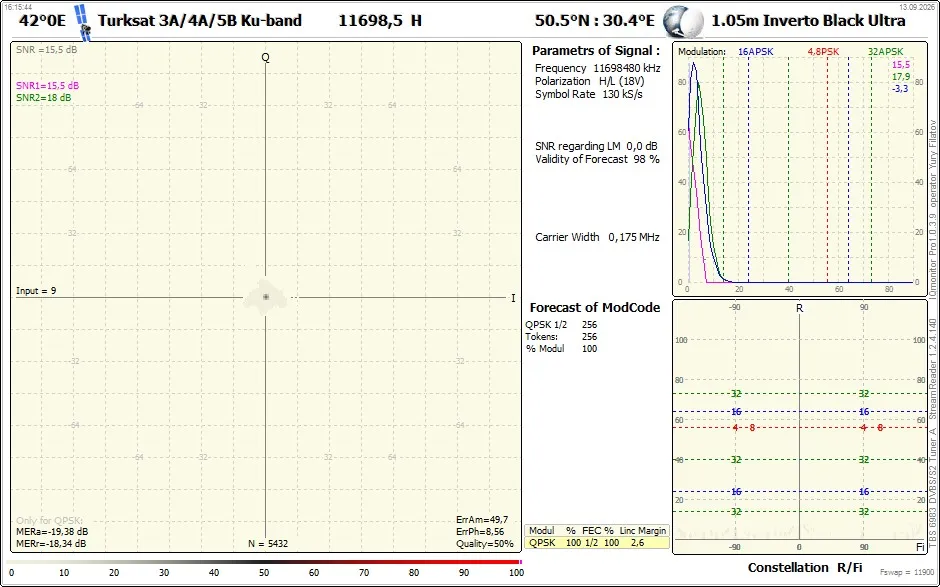
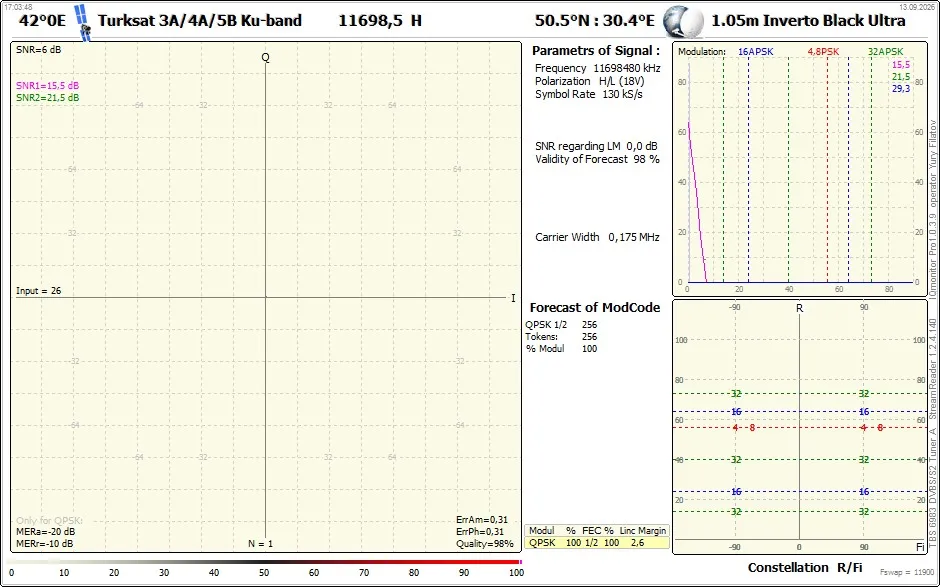
    Модуляция S2 отвечает синей ступенчатой линии, которая начинается в точке с С/No =-3. 3 dB и заканчивается на "лестничной площадке" c С/No = 15.5 dB (смотри верхний правый угол, синий и сиреневый цвет SNR) :

    И ещё один R - спектр с единственной спектральной линией R = 0 . SNRs2x = 15.5 dB (сиреневый) и MaxSNRs2x = 29.3 dB (синий):

    Красная ступенчатая линия начинается с SNR = -10.2 dB и поднимается более мелкими ступенями до 20 dB и не собирается обрываться на этом уровне... Как нетрудно догадаться по числу ступенек, шаг дискретизации этой линии примерно вдвое меньше, чем у DVB-S2.

    "Знатоки" утверждают, что красная линия S2X ближе к информационному пределу Шеннона, чем синяя S2... И нам с Эней вначале показалось, что зубчатая царапина на стене стремится к гипотенузе AC  :21: :22:

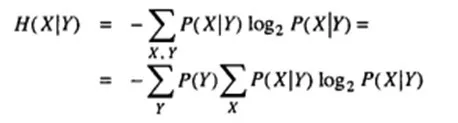
    Но Шеннон также предложил дополнительную формулу, которая все-таки позволяет уходить за им же открытый предел :

    :7:

    - You know, Eni, I think qwer was chuckling not just because he gave an answer that seemed paradoxical at first glance yet was correct, but because—like me—he was reminded of a graph well-known among true DXers: the plot showing the spectral efficiency of satellite transmission versus signal C/No for DVB-S2 and DVB-S2X modulation schemes.

    The S2 modulation corresponds to the blue stepped line, which starts at a point with a C/No of -3.3 dB and ends on a "landing" at C/No = 15.5 dB (look at the top right corner, where SNR is marked in blue and lilac):

    And here is another "R"—a spectrum with a single spectral line at R = 0. SNRs2x = 15.5 dB (lilac) and MaxSNRs2x = 29.3 dB (blue):

    The red stepped line starts at an SNR of -10.2 dB and rises in smaller steps up to 20 dB, showing no signs of stopping at that level... As you can easily guess from the number of steps, the discretization step for this line is roughly half that of DVB-S2.

    "Experts" claim that the red S2X line is closer to the Shannon information limit than the blue S2 line... And at first, Eni and I thought that jagged scratch on the wall was heading toward the hypotenuse AC :21: :22:

    But Shannon also proposed an additional formula that actually allows one to go beyond the very limit he discovered :7:

  • - странник , ты заметил, что посетителей у Палаты №6 практически нет, а наши вопросы без эха затухают в пустых коридорах...

    - Ени , прими как данность, что мы никому не интересны, а вопросы недостаточно безумны для жаждущей пощекотать свои нервы публики.

    - хорошо, задай вопрос, который вызовет оторопь у настоящих DX-эров, зацепит их самолюбие, заставит искать ответ в своей сокровищнице знаний и на интернет-свалке, пробовать принять на свои большие и огромные антенны такой же сигнал :51:

    - легко ! Вот вопрос :

    С позиции 42°E на антенну 1.05м принят с SNR=13.3dB "чистый" DVB-S2X сигнал. В каком луче и какой спутник его передаёт ?

    После получения трёх неверных ответов буду выдавать подсказку. После получения следущих трёх неверных ответов буду выдавать следущую подсказку и так далее, пока не будет найден приемлемый ответ :96:

    - Strannik, have you noticed that there are practically no visitors to "Ward No. 6," and our questions just fade away without an echo in the empty corridors...

    - Eni , accept the fact that we don't interest anyone, and our questions aren't crazy enough for an audience that craves a thrill.

    - Alright then, ask a question that will leave real DXers dumbfounded, challenge their pride, force them to dig through their treasure troves of knowledge and the internet's junk heaps, and try to capture that same signal on their massive antennas... :51:

    - Easy! Here’s the question:

    From the 42°E position, a "clean" DVB-S2X signal with an SNR of 13.3 dB was received on a 1.05m antenna. Which satellite is transmitting it, and in which beam?

    After three incorrect answers, I’ll provide a hint. After the next three incorrect answers, I’ll give another hint, and so on, until an acceptable answer is found. :96:

  • Eastbeam from 6A

    If you don't specify the antenna size and the approximate location, posting is useless if it's about signal acquisition.

    "Auto" should never be in the settings.

    Dish & Location

    N 48.602 E 15.553

    240 Irte (Ku/C)

    180 Laminas stationary (KaEABCD/Ku/C/X), mobil (all)

    120 Laminas (Ku)

    100 (Ku, 7°E/1.9°E/1°W), 85 (Ku, 13°E/16°E/19.2°E)

  • Eastbeam from 6A

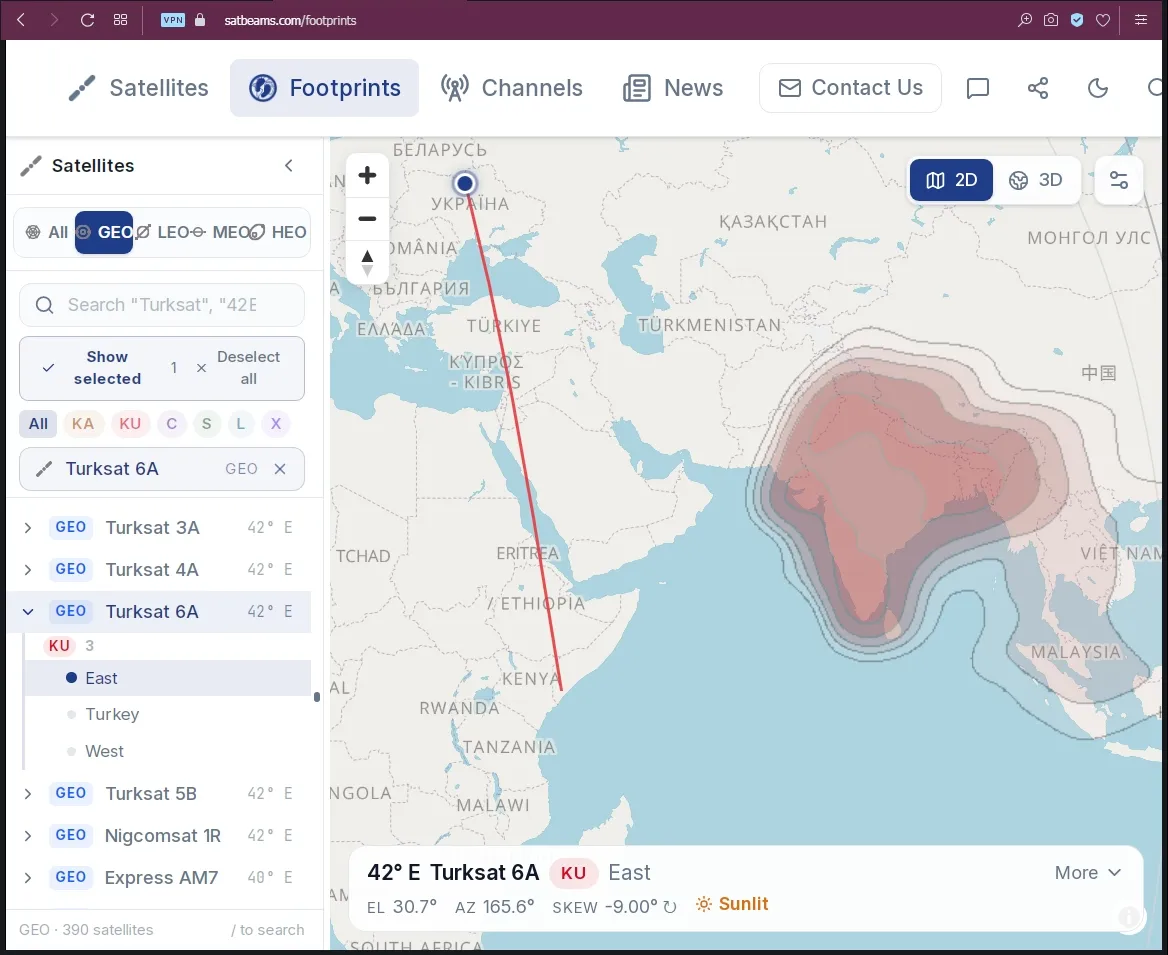
    Вы видите красный луч от позиции 42°E до Kиева и зону покрытия над Индией. Вас это не смущает ? :125:

    You see a red beam extending from the 42°E position to Kyiv, as well as a coverage zone over India.

    Does that not strike you as odd?

    Какое объяснение Вы можете дать этому феномену ? :28:

    What explanation can you offer for this phenomenon?

  • Eastbeam from 6A

    - Эни ! Нам снова забили с первого же удара под перекладину ! :48: У нас может появится ещё один достойный сосед. Ждём письменного согласия уважаемого  femi  :74:
    - Eni! We’ve conceded another goal—this time right under the crossbar on the very first shot! :48: We might be getting another worthy neighbor. We’re awaiting written consent from the esteemed femi  :74:

    Правильный ответ получен почти мгновенно, но у нас возникли два новых вопроса :

    Вы видите красный луч от позиции 42°E до Kиева и зону покрытия над Индией. Вас это не смущает ?

    Какое объяснение Вы можете дать этому феномену ?

    The correct answer was received almost instantly, but we had two new questions:

    You see the red beam from position 42°E to Kiev and the coverage area over India. Doesn't this bother you?

    What explanation can you give for this phenomenon?

    Ждём Ваших ответов, особенно от уважаемых DX-эров - это точно по Вашей части. Будем вести счёт среди гроссмейстеров

    We look forward to your answers—especially from our esteemed DXers, as this is right up your alley. We’ll be keeping score among the grandmasters :101:

  • In erster Linie würde ich auf eine Nebenkeule tippen, wie es auch beim Türkeibeam in Deutschland der Fall sein dürfte, denn an meinem weiter östlichen Standort geht nichts mehr. Gleichzeitig stellt sich mir die Frage, wie sieht es mit dem Empfang zwischen der roten Linie und Indien aus?

    I would primarily suspect a sidelobe—much like the situation with the Turkey beam in Germany—since I can't pick up anything at my location further east. At the same time, I wonder: what is reception like in the area between the red line and India?

    В первую очередь я бы предположил наличие бокового лепестка — вероятно, такая же ситуация наблюдается и с турецким лучом в Германии, поскольку в моей местности (расположенной восточнее) сигнал уже не ловится. В то же время мне интересно: как обстоят дела с приемом на участке между красной линией и Индией?

    If you don't specify the antenna size and the approximate location, posting is useless if it's about signal acquisition.

    "Auto" should never be in the settings.

    Dish & Location

    N 48.602 E 15.553

    240 Irte (Ku/C)

    180 Laminas stationary (KaEABCD/Ku/C/X), mobil (all)

    120 Laminas (Ku)

    100 (Ku, 7°E/1.9°E/1°W), 85 (Ku, 13°E/16°E/19.2°E)

  • In erster Linie würde ich auf eine Nebenkeule tippen, wie es auch beim Türkeibeam in Deutschland der Fall sein dürfte, denn an meinem weiter östlichen Standort geht nichts mehr. Gleichzeitig stellt sich mir die Frage, wie sieht es mit dem Empfang zwischen der roten Linie und Indien aus?

    femi , я с Вами абсолютно согласен -- скорее всего принимается первый боковой лепесток ДН передающей антенны на спутнике. Если антенна облучается согласованным рупором, который установлен с точным совмещением фазового центра с геметрическим фокусом параболоида, то уровень первых боковых лепестков составляет от -20 до -18 дБ уровня в центре зоны покрытия того или иного луча. Что-то мне подсказывает, что такое положение занимает облучатель "Турецкого луча", который работает не только на излучение в Ku диапазоне, но и на приём более высокочастотных сигналов от "Аплинка" . Излучатели других "лучей" относительно своих зеркал в худшем, мультифидном положении. Уровень боковых лепестков этих излучателей на 1 - 2 дБ выше, чем у "фокусного" излучателей. И, наконец, "индийский" луч имеет весьма замысловатую форму с резким затуханием луча сразу же за официальной границей покрытия. Такое распределение мощности в пределах зоны покрытия "луча" достигается путём установки электромагнитных диафрагм и бленд на излучающем рупоре. Это приводит резкому возрастанию бокового излучения антенны.

    Таким образом, боковой лепесток может быть всего на 13 - 16 дБ меньше уровня сигнала внутри зоны покрытия.

    Ответ на Ваш вопрос может быть получен путём анализа наблюдений частоты 12521 МГц H любителями спутникового приёма в Турции, Румынии и Украине. Кроме предоставления информации по этому DVB-S2X транспондеру нужно предоставить H и V спектры с просканированными транспондерами в диапазоне 10950 - 12750МГц для оценки добротности приёмной установки.

    PS Кубок под Вашим сообщением означает не только признания правильности Вашего ответа, но и Ваше право на письменную заявку на присоединение к пока маленькому, но боевитому коллективу ПАЛАТЫ № 6

    femi I completely agree with you—most likely, the first sidelobe of the satellite transmitting antenna's radiation pattern is what is being received. If the antenna is illuminated by a matched feed horn positioned so that its phase center aligns precisely with the paraboloid's geometric focus, the first sidelobe level ranges from -20 to -18 dB relative to the signal level at the center of that specific beam's coverage area. I suspect that this optimal positioning applies to the "Turkish beam" feed, which handles not only Ku-band transmission but also the reception of higher-frequency uplink signals. The feeds for other beams are in a less favorable "multifeed" position relative to their reflectors; consequently, their sidelobe levels are 1–2 dB higher than those of the "focal" feed. Finally, the "Indian" beam has a highly complex shape, featuring a sharp signal drop-off immediately beyond the official coverage boundary. This power distribution within the beam's coverage area is achieved by installing electromagnetic apertures and shrouds on the feed horn, which leads to a sharp increase in the antenna's sidelobe radiation.

    Thus, the sidelobe level may be only 13–16 dB lower than the signal level within the coverage area.

    The answer to your question can be found by analyzing observations of the 12521 MHz (H-polarization) frequency made by satellite reception enthusiasts in Turkey, Romania, and Ukraine. In addition to data on this DVB-S2X transponder, it is necessary to provide H and V spectra covering the 10950–12750 MHz range to assess the quality of the receiving setup.

    P.S. The trophy icon beneath your post signifies not only an acknowledgment that your answer was correct but also your right to submit a written application to join the "Ward No. 6" team—a group that may be small for now, but is a spirited, fighting force.

    :74:

  • Мне сняться кошмарные сны :

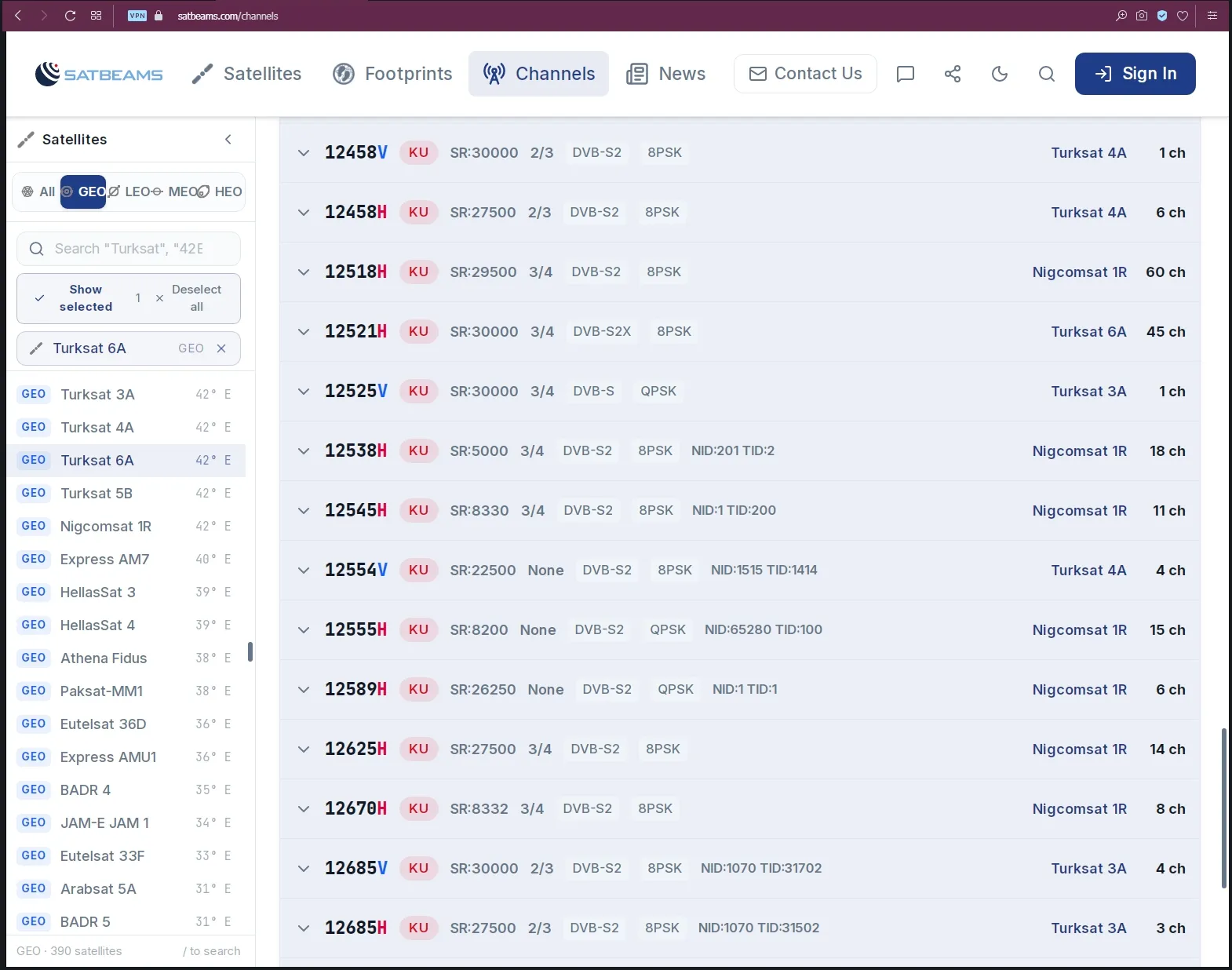
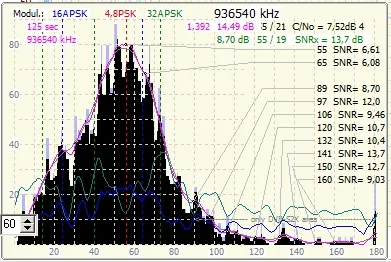
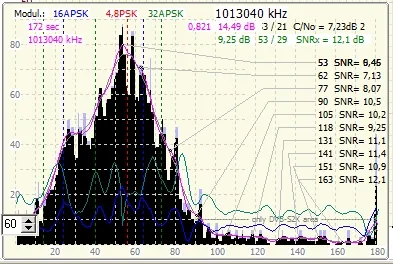
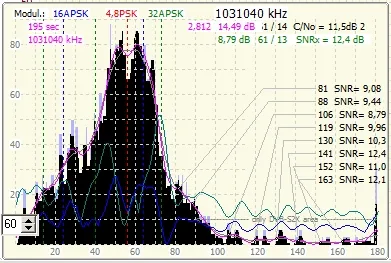
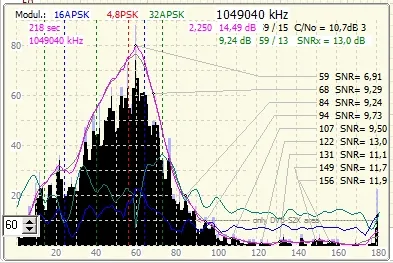
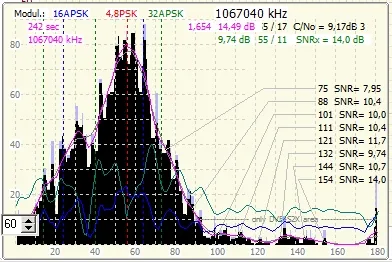
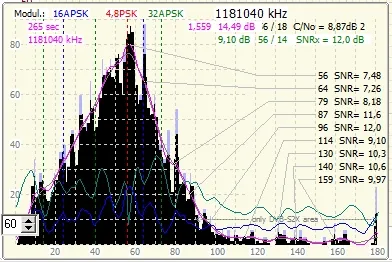
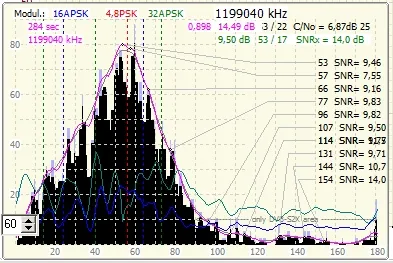
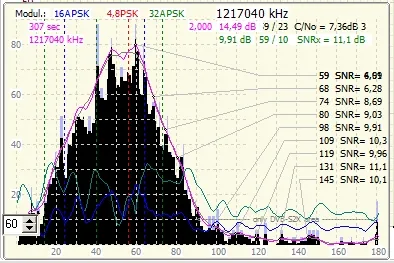
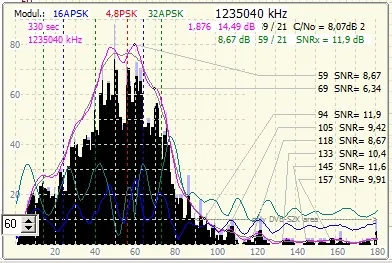
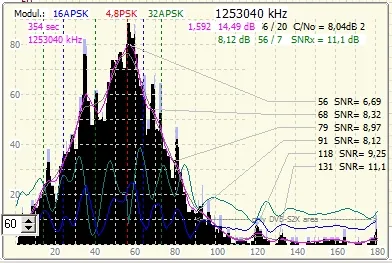
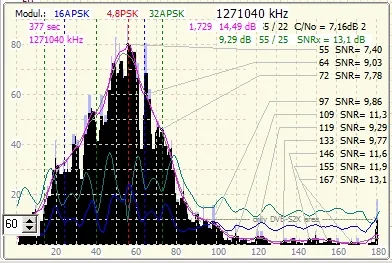
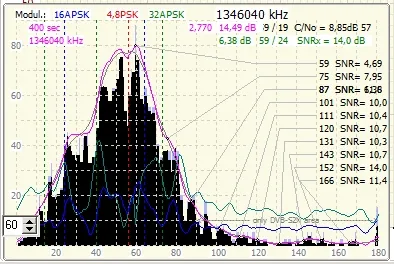
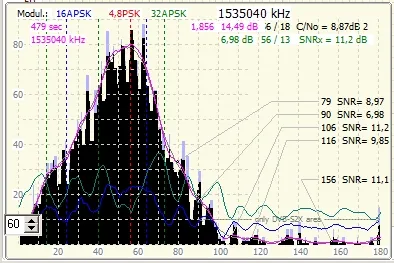
    при сканировании 42°E в Ku диапазоне внезапно начинают лочится на порядок более низкочастотные транспондеры стандарта DVB-S2X ! Время от начала сканирования и частота настройки карты TBS-6983 сиреневым цветом отмечены в верхнем левом углу .

    В верхнем правом углу, после значения C/No в dB стоит чёрная цифра - это время в ms, за которое процедура BlindScan достигает фазовой синхронизации при локе сигналов. Чем сильнее и "чище" сигнал, тем быстрее достигается его лок. Обычно у меня лок сигнала с SNR порядка 15dB достигается за 500 - 800ms. Тут же лок достигается за 2 - 4ms, но есть исключения...

    У кого какие соображения, что это может быть и есть ли какая-нибудь закономерность в этих частотах ?

    I have nightmares:

    when scanning 42°E in the Ku band, lower-frequency transponders of the DVB-S2X standard suddenly begin to fail! The time from the start of scanning and the frequency of adjustment of the TBS-6983 card are marked in lilac in the upper left corner.

    Does anyone have any ideas about what this could be and is there any pattern in these frequencies?


    :40:  :38:

  • When I translate the Russian and English text, I get quite contradictory results.:50:

    So far, I've only been able to observe that, for example, on the same frequency, 32APSK FEC 3/4 and QPSK 1/4 switch back and forth.

    If you don't specify the antenna size and the approximate location, posting is useless if it's about signal acquisition.

    "Auto" should never be in the settings.

    Dish & Location

    N 48.602 E 15.553

    240 Irte (Ku/C)

    180 Laminas stationary (KaEABCD/Ku/C/X), mobil (all)

    120 Laminas (Ku)

    100 (Ku, 7°E/1.9°E/1°W), 85 (Ku, 13°E/16°E/19.2°E)

  • When I translate the Russian and English text, I get quite contradictory results. :50:

    So far, I've only been able to observe that, for example, on the same frequency, 32APSK FEC 3/4 and QPSK 1/4 switch back and forth.

    Ich habe geradezu albtraumartige Erlebnisse:

    Beim Scannen der Position 42° E im Ku-Band beginnen plötzlich Transponder des Standards DVB-S2X einzurasten, die auf einer deutlich niedrigeren Frequenz liegen! Die Zeit seit Beginn des Scans und die eingestellte Frequenz der TBS-6983-Karte sind oben links in Fliederfarbe markiert.

    Oben rechts, hinter dem C/No-Wert in dB, steht eine schwarze Zahl: Sie gibt die Zeit in Millisekunden (ms) an, die der BlindScan-Vorgang benötigt, um beim Signal-Lock die Phasensynchronisation zu erreichen. Je stärker und „sauberer“ das Signal ist, desto schneller erfolgt der Lock. Normalerweise erreiche ich bei einem Signal mit einem SNR von etwa 15 dB einen Lock innerhalb von 500 bis 800 ms. Hier jedoch erfolgt der Lock bereits nach 2 bis 4 ms – allerdings gibt es Ausnahmen...

    Hat jemand eine Idee, worum es sich dabei handeln könnte, und lässt sich bei diesen Frequenzen irgendein Muster erkennen? :25:

  • When I translate the Russian and English text, I get quite contradictory results. :50:

    So far, I've only been able to observe that, for example, on the same frequency, 32APSK FEC 3/4 and QPSK 1/4 switch back and forth.

    Danke für Ihre Rückmeldung. Ich fürchte, dass ich keine weiteren Versionen mehr erhalten werde. Daher ist es mir besonders wichtig zu verstehen, auf welchen konkreten Frequenzen und auf welche Weise Sie die Modulation sowie die FEC in diesen Abbildungen bestimmt haben.

    Für Ihre Antwort wäre ich Ihnen sehr dankbar :74:

    Спасибо за Вашу реакцию. Боюсь, что других версий я не дождусь. Поэтому мне особенно важно понять, на каких конкретно частотах и как Вы определили модуляцию и FEC на этих картинках.

    Буду весьма благодарен за Ваш ответ

    :70:

Participate now!

Don’t have an account yet? Register yourself now and be a part of our community!